The tradition
What is a revue show?
A revue is a run of acts held together by a theme, not a plot. What that means for the Grand Show and how a revue differs from a musical.
Book the Grand Show ↗Quick answer
A revue is a multi-act entertainment that combines music, dance and sketches. Wikipedia says that, unlike a musical or operetta, a revue has no overarching storyline: a general theme links acts that are only loosely related. The Grand Show in Berlin sits in that tradition, and the venue says it relies on dance, music, acrobatics and imagery more than on plot.
The short definition
Wikipedia defines a revue as a type of multi-act popular theatrical entertainment that combines music, dance and sketches. Wikipedia traces its roots to popular entertainment and melodrama of the 1800s, and dates its golden years from 1916 to 1932. Revues are most famous for visual spectacle, and they often poked fun at current figures, news or literature. The word covers a whole family of shows, from student revues to the large houses of the 1920s.
Where the word comes from
Revue is the French word for review, as in a show presenting a review of current events, according to Wikipedia. The English spelling was used until 1907, when the American producer Florenz Ziegfeld popularised the French one. Wikipedia lists his Follies among the leading revue names on Broadway, alongside George White's Scandals and Earl Carroll's Vanities. The name first described the content: a show that reviews current events.
No storyline, one theme
The feature that matters most for a visitor is the structure. Wikipedia says a revue has no overarching storyline. Instead a general theme works as a motto, and the acts beneath it are only loosely related, alternating between solo performances and dance ensembles. That is why a revue can be enjoyed without following a plot. Each act has its own picture and its own mood, so it can be enjoyed on its own terms.
The Berlin revue
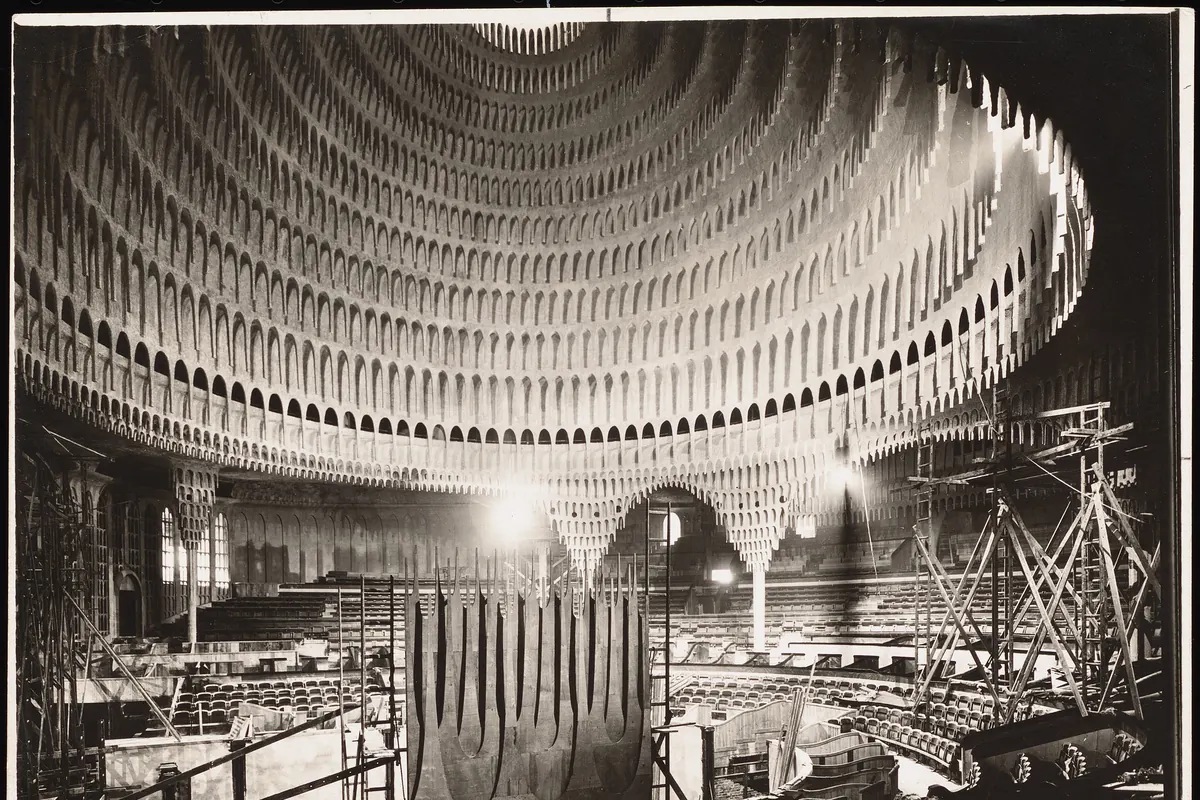
Berlin has a revue history of its own. The venue says the revues of the director Erik Charell, who led the Großes Schauspielhaus from 1924, shaped the reputation and the look of the Golden Twenties in Berlin. Wikipedia says he mixed German operetta with jazz and brought in the Tiller Girls, an internationally known dance troupe from London. The house on Friedrichstraße keeps that lineage alive in its history page and in the memorial to its founders.
How the Grand Show fits
The venue describes its current Grand Show as a show in the tradition of the Berlin revue. It says the production is primarily driven by visual storytelling, dance, music, acrobatics and imagery rather than a linear plot. The booking page adds a thread: a woman named Luci wakes in a dream world. Think of that as the motto Wikipedia describes, a theme that gathers the acts. The venue also says the show is subject to change, as productions do over the years.
Revue or musical?
A book musical tells one story across its scenes, with spoken dialogue and songs that move the plot on. A revue gathers acts. Choose a revue if you want large ensemble dance, circus-style feats, costume and music, and you are content to read the story from the pictures. Choose a musical if you want characters you can follow line by line and a plot with an ending. Neither is better; they answer different wishes for an evening, and language matters less in the first.
Who a revue isn't for
A revue is not for anyone who wants a plot to follow in detail, a quiet evening or an intimate room. The Grand Show is a large, loud and brightly lit production, and the venue warns about the volume and the lighting effects, advising people prone to epileptic seizures not to attend. The booking page also lists the show as unsuitable for children under 8. If those points describe your party, a drama, a concert or a smaller theatre will give you a better night.
Frequently asked questions
What does revue mean?
It is the French word for review. In theatre it means a multi-act show combining music, dance and sketches, linked by a theme rather than a plot.
Are revues only a German form?
No. Wikipedia describes revues on Broadway, in Britain and in Argentina as well, and as student entertainment in many countries today.
Does the Grand Show have a story?
It has a thread: the booking page describes a woman named Luci in a dream world. The venue says the show is carried by imagery, not a linear plot.
Do I need to know German theatre to enjoy it?
No. A revue reads through its pictures, and the venue says many international guests enjoy the show without German.
Sources