The house
A revue house since 1919
From market hall and circus to Max Reinhardt's playhouse, the Golden Twenties revues and the 1984 building: how the Palast became a revue house.
Book the Grand Show ↗Quick answer
The Palast traces its stage history to 29 November 1919, when Max Reinhardt opened the Großes Schauspielhaus in a rebuilt Berlin market hall and circus. It took its present name on 1 November 1947. The old building closed in 1980 because of subsidence, and the new Palast opened at Friedrichstraße 107 on 27 April 1984. The booking is for a show in that newer building.
A market hall on the Spree
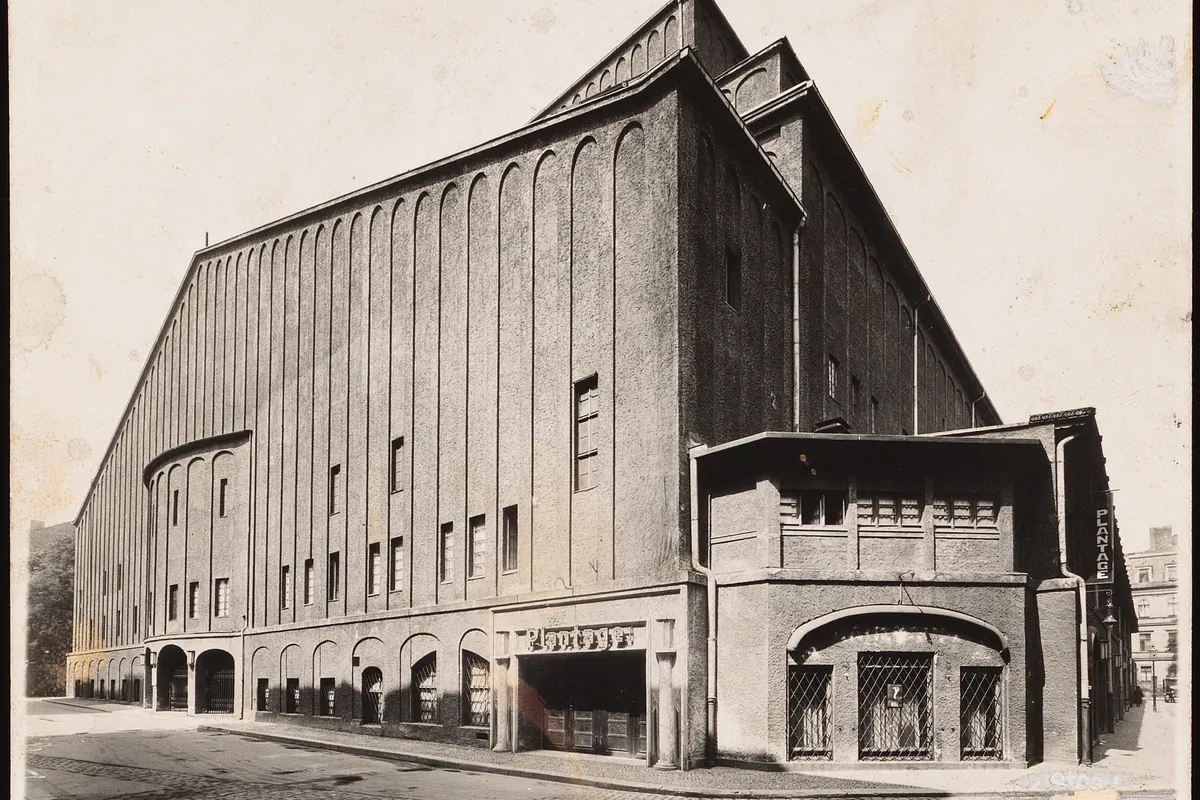
The story starts with a market hall. Wikipedia says it was built between 1865 and 1867 on Schiffbauerdamm to a design by Friedrich Hitzig, as Berlin's first modern purpose-built market hall, but it closed after a few months for lack of interest. In 1873 it became a circus with about 5,000 seats, and the address became Am Zirkus 1, by the circus. Circus Renz used the hall from 1879 to 1897, and Circus Schumann from 1899 to 1918, according to Wikipedia.
Reinhardt and Poelzig, 1919
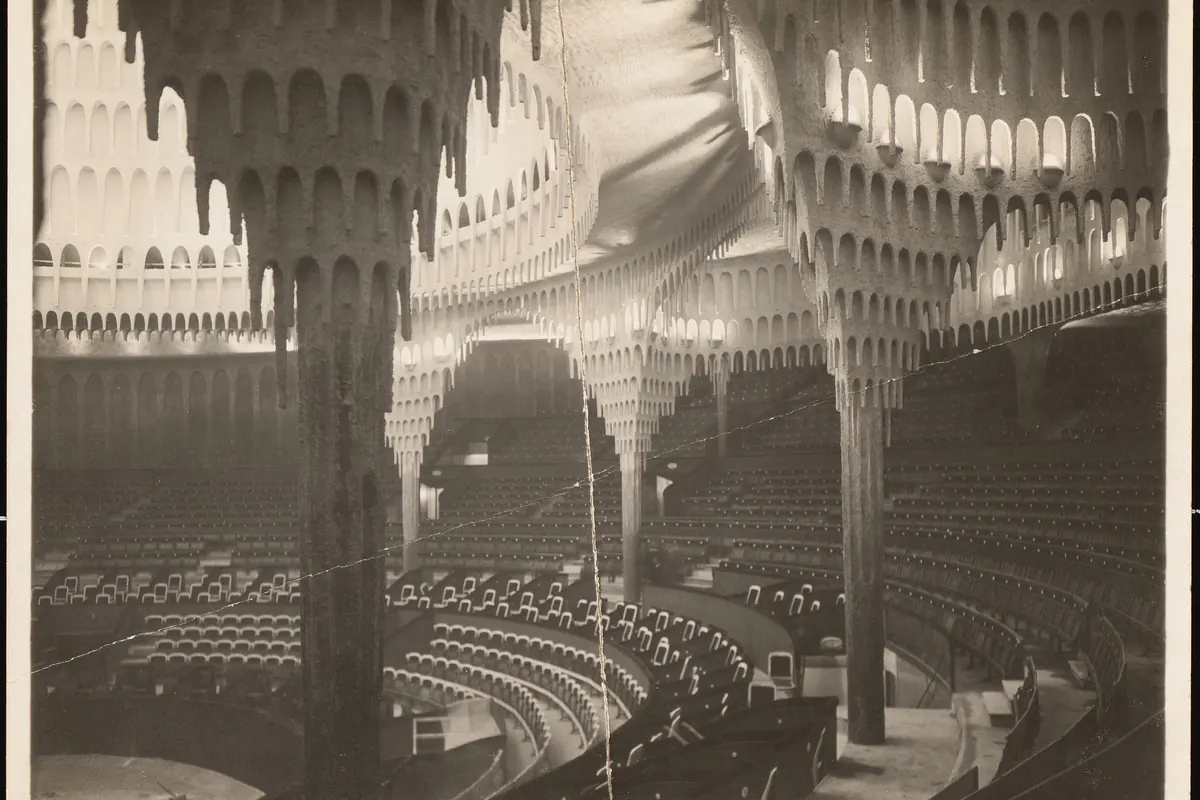
The venue says its history began on 29 November 1919, when Max Reinhardt opened the Großes Schauspielhaus, the precursor to the Palast. Reinhardt commissioned the architect Hans Poelzig to design a theatre hall, and the venue says its stalactite dome, which Berliners called the dripstone cave, was an international sensation. Wikipedia adds that Reinhardt's company bought the building in 1917, and lists The Oresteia among the productions he staged there, which made use of a revolving stage.
Charell and the Golden Twenties
From 1924 the director Erik Charell led the house, and the venue says the revues he created still characterise the reputation and the look of Berlin's Golden Twenties. Wikipedia says his first revue there was An Alle in 1924, for which he engaged the Tiller Girls, a dance troupe from London. His later productions included Casanova in 1928. In 1928 the vocal group the Comedian Harmonists was put together from singers of the theatre's own choir, Wikipedia says, and Charell presented them in Casanova.
The name Friedrichstadt-Palast
The venue says the house took its present name, Friedrichstadt-Palast, on 1 November 1947. Wikipedia describes the years after the Second World War as a period of variety programmes and large events at the theatre, and says the old building stood on until subsidence forced it to close. The name has stayed with the institution through two buildings. The venue treats its history as one story that began in 1919, even though the hall you sit in today dates from 1984.
Closure and the new building
The venue says the old Palast had to close in 1980 because of major subsidence and structural damage. Wikipedia explains that construction work for a new hospital nearby lowered the groundwater and damaged the old building's timber piles. The new Palast opened on 27 April 1984 at Friedrichstraße 107, only a few blocks from the old site. The venue calls it the last major grand construction project of East Germany. The old building was demolished in 1985, Wikipedia says.
What stayed
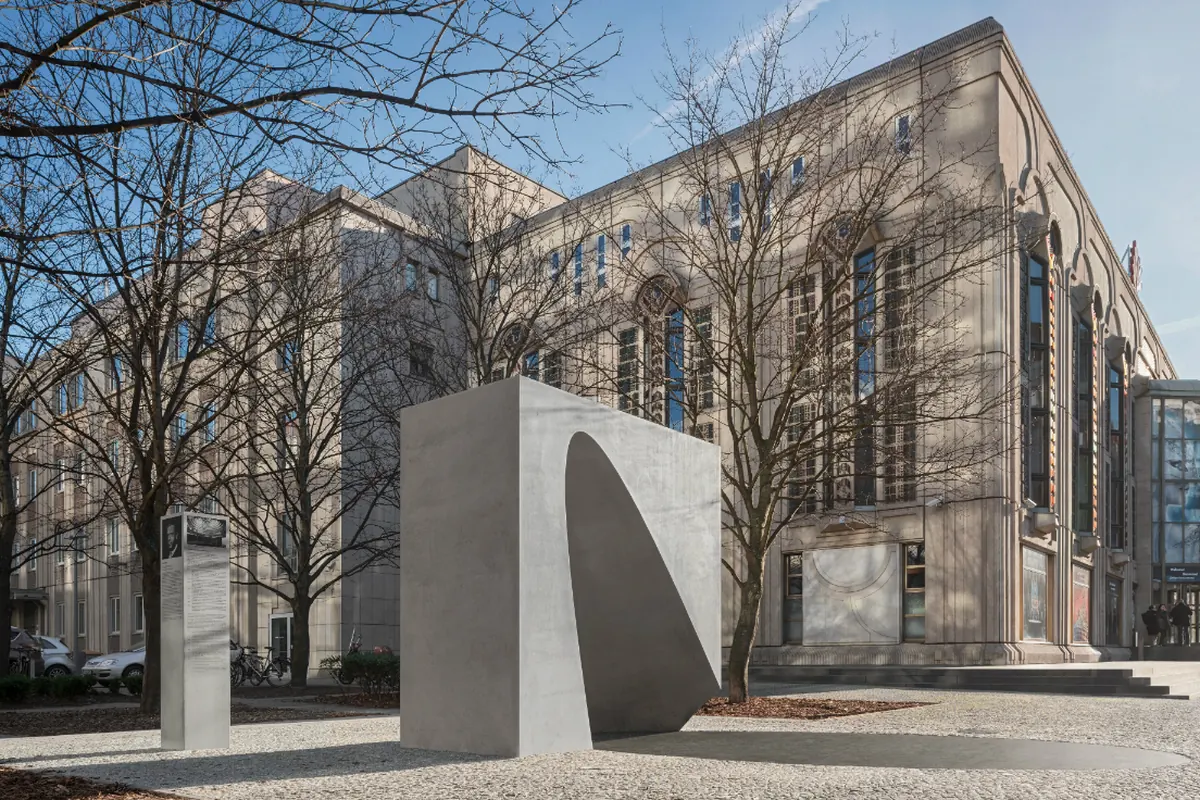
The venue lists three reminders of the first building. A memorial at Friedrichstraße 107 honours the theatre's founders, Max Reinhardt, Hans Poelzig and Erik Charell. For the centenary, the venue unveiled a section of facade from the old market hall that was found again in a courtyard in Kreuzberg in 2016 and restored. A flag outside the main entrance for the hundredth anniversary carried the words Jewish roots since 1919 in German and English.
The house today
The venue says its Grand Shows are modern and use the latest high-tech effects, in a revue tradition that goes back to Charell. It keeps a ballet company, a show band and a young ensemble, and in February it becomes a cinema for the Berlin film festival, according to its backstage page. The hall holds close to 1,900 seats. For a visitor, the history explains why a revue of this size is staged in Berlin at all: the city has had a house for the form since 1919.
Frequently asked questions
When was the Palast founded?
The venue dates its history to 29 November 1919, when Max Reinhardt opened the Großes Schauspielhaus. It took the name Friedrichstadt-Palast on 1 November 1947.
Is today's building the original?
No. The old building closed in 1980 and was later demolished. The present Palast opened on 27 April 1984 at Friedrichstraße 107.
Who was Erik Charell?
A dancer and director who led the house from 1924. The venue says his revues characterise the reputation and look of Berlin's Golden Twenties.
Does the show in the booking come from that history?
It continues the revue tradition the venue claims for itself, but the production is modern and changes over the years.
Sources